
A perspective from home
I am an Occupational Therapist. I see tactile sensitive kids on a daily basis. I know what to look out for and I know how to work on tactile sensitivities. What I did not know is that despite being an OT and doing everything “right” my child will still have sensory sensitivities.
Sometimes that is just how the cookie crumbles and let me tell you we have days where the cookie crumbles 😉
What is Tactile Sensitivity?
Tactile Sensitivity is when a child can only tolerate a small amount of tactile input before they reach their threshold or before their sensory cup is filled. They might become upset, anxious or present with disorganised behaviour in response to too much tactile input. It is also sometimes referred to as Tactile Defensiveness.
The two profiles:
It is important to note that not all tactile sensitive kids presents in exactly the same way. We have two sensory profile types and we often see a mix of a bit of both, however one can quite easily differentiate the main characteristics.
In both instances they have a very small sensory cup which is easily filled to the brim, but their engagement in tactile play can be quite different. Any input added on top of an already full sensory cup leads to overstimulation which presents as a fight, flight or fright response.
SENSORY SENSITIVE
A child that is sensory sensitive might often confuse a parent or teacher because they do engage in tactile play but then just as eagerly as they can participate, they will opt out of play again. It helps that they are often willing to try and engage in tactile activities but a cumulation of tactile experiences can mean that they reach their threshold quickly.
AVOIDANT
This is so my little girl’s profile and also a very challenging profile to work with – go figure :). Luckily I won’t have to be her OT 😉 Unlike the purely sensitive profiles the avoiders often don’t even try to engage in tactile play. My daughter usually just looks at a texture and says: “no thank you mama” ;).
Common signs:
For us the signs were there early on and as time went on more red flags came to light. I remember, being an OT and all, how I asked the nanny to put her in our beanbox at work and how she literally pulled up her legs and started crying as soon as she touched the beans.

Some of the things we observe/d:
1. Dislikes certain (mostly unfamiliar) textures such as beans and sand
2. Avoids new tactile experiences altogether like touching jellybuff or cooked spaghetti
3. Dislikes others moving into her personal space (she needs the control)
4. Does not particularly like to hold your hand
5. Sensitive to food textures
6. Often sits on the outskirts of play or prefers not to be in the middle of a group of kids
7. Dislikes brushing teeth
8. Often says “ouch” when you hold onto her arm or shoulder when trying to get through grooming activities
9. Freaks out when the dog licks her
10. Did not want to touch certain foods like broccoli or corn
11. Cries when we try to do her hair
This is just a few things we observed and her sensitivity is definitely mild. But whether mild or not, her sensitivity affects her functioning in daily activities and that it the most important thing to look out for. Other typical red flags includes:
1. Reacts aggressively to touch
2. Very particular about clothing including, shoes, socks, seams, tags and textures
3. Dislikes grooming activities
4. Does not like their hair or nails being cut
5. Has a bigger than average personal bubnle
6. Dislikes being tickled
7. Does not like to be cuddled
8. Negative reaction to crowded environments
9. Gets physical i.e. pushing, when others gets into their personal space
How did this happen?
This is probably a question that every single parent asks during our feedback sessions and even though there are some possible causes for sensitivities in kids, sometimes that’s just how we are knit together. Just like each of us has our own temperament and unique physical qualities, we have a particular sensory profile.
That being said some of the suspected causes of tactile sensitivities are:
1. Genetics (A sensitive parent)
2. Limited exposure to messy play activities
3. Learned sensitivity: Children that gets the message that dirty is “not good” i.e. constantly wiping their hands or face or a parent does not allow them to get messy
4. Children that spend a long time in NICU
What can we do?
1. Occupational Therapy:
There is definitely no substitute for Occupational Therapy so first and foremost if you see any of the red flags mentioned above and are worried about it affecting your child’s daily occupations, contact a Sensory Integration trained Occupational Therapist for an in-dept assessment.
2. Make adjustments to the environment and how you do things:
This can be very specific to your child and their unique sensory profile, however some basic ideas are:
2.1. Use firm pressure as opposed to light touch when touching your child
2.2. Try to limit unexpected touch i.e. coming from behind
2.3. Build opportunities to give deep pressure or proprioceptive input into your day in order to help calm the neurological system. (See our instagram page for some ideas). Before, during or after participation in tactile activities can all work.
2.4. Give your child some control like wiping their own face or choosing which clothing they want to wear.
2.5. Respect your child’s personal space and boundaries i.e. don’t force them to give hugs, kisses or hold hands
2.6. Be careful of tickling even if they laugh it can quite quickly cause them to reach their thresholds
3. Expose your child at home:
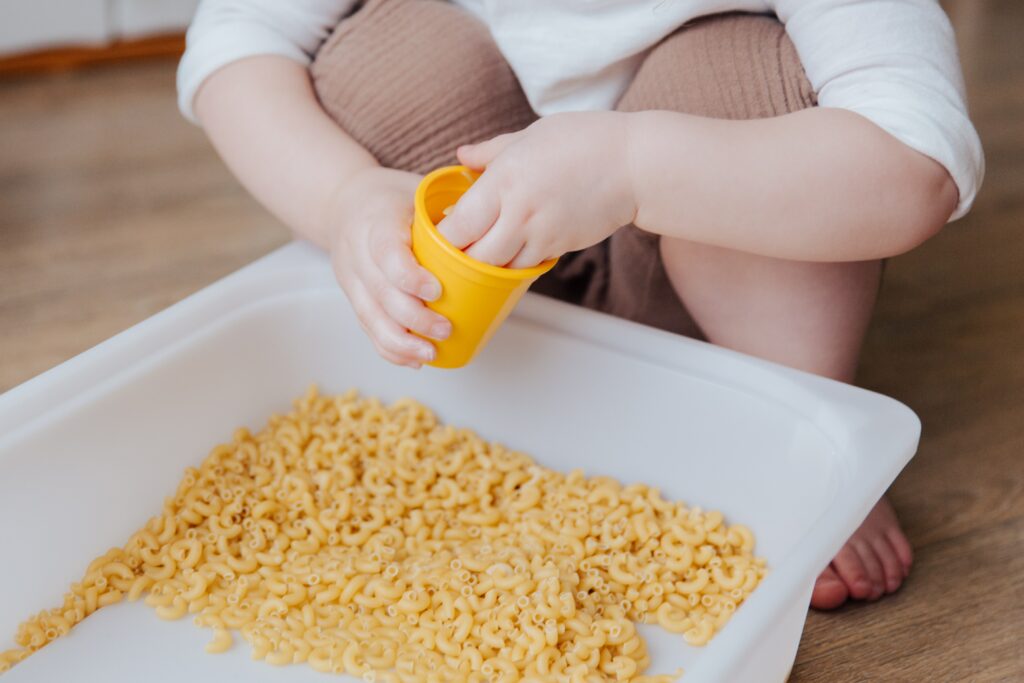
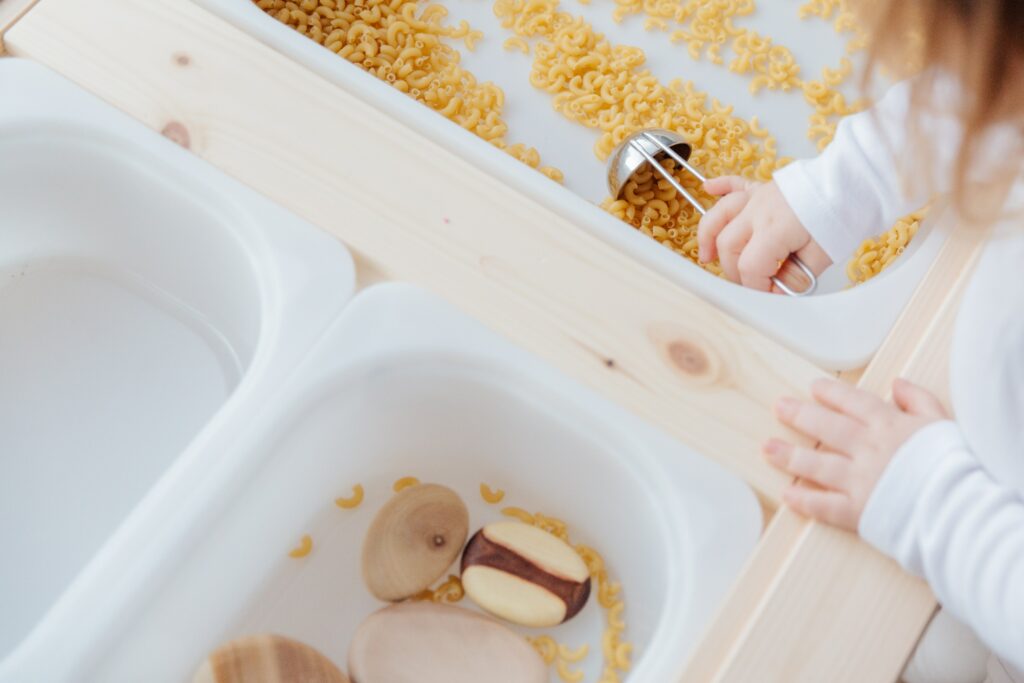
Sensory trays are a great way to expose them to different textures. A sensory tray is a large box filled with a sensory medium that a child can play with i.e. rice, beans, seeds, water, pasta, flour, jelly orbies… the list is endless. This pinterest post has some great sensory tray activities. A few important things:
3.1. Start with tactile activities that are in their comfort zone and slowly move towards tactile mediums that they are less comfortable with
3.2. Start by giving them utensils and bowls in order ro make it less daunting
3.3. Make it playful and fun by incorporating fantasy play i.e. making food for their teddy bears
3.4. Engage actively with your child and show positive emotions (model a positive experience)
If you suspect your child has difficulties related to tactile sensitivity (or any other sensory related difficulties), contact us for an in-dept assessment. We look forwards to taking hands with you and working together towards greater functionality.
Disclaimer: Please note that we are merely giving ideas to try at home, but if tactile sensitivity is suspected it is important to collaborate with an Occupational Therapist